Top 7 Software Development Trends Shaping the Industry in 2026
A brief survey of software development trends in 2026 for engineering leaders and developers working with agentic AI tools, cloud-native platforms, DevSecOps automation, and WebAssembly.
If you speak to any senior engineering manager this week, they will share the same perspective. Software development is going through a major change.
A few years ago, developers spent weeks writing boilerplate code, setting up their local environments, or dealing with their build pipelines.
However, this is changing quickly as we move into 2026.
In today’s environment, software teams face new challenges when launching products.
Here are the main software development trends for 2026 that every tech leader should know about.
AI Coding Tools are Becoming More Than Just Suggestions
While simple inline suggestions were a big breakthrough, the newer generation of agentic coding assistants is doing much more than improving developer productivity.
These assistants can now be considered as autonomous partners in the coding process.
For example, previously an AI partner might have finished my half-written line of code, but now I can ask my AI partner to:
- Refactor a multi-file pull request
- Write an entire test suite for an integration
- Identify performance issues in a pull request before deployment
Cloud-Native Architecture is Now the Standard
When building applications for the cloud, there is a strong trend towards using cloud-native methods to develop applications.
This means that teams are moving towards standard practices, such as packaging software as containerized microservices, instead of creating many custom deployment scripts.
Companies are aiming to develop cloud-native applications that can scale up or out automatically to handle increased demand with no need for manual intervention.
The Growth of Platform Engineering
Although the goal of DevOps was to support developers, it often added more complexity.
Platform engineering addresses this by creating self-service developer platforms. Tools like Internal Developer Platforms (IDPs) allow developers to perform infrastructure tasks such as setting up a new staging database or deploying a new microservice with just a few clicks in a developer portal.
Shift-Left Security and Automated DevSecOps
Security is now a top priority for everyone, due to the rise in major data breaches and growing legal pressure around privacy.
The traditional method of application security, which relied on annual penetration tests, is no longer sufficient.
Legacy Approach (Before 2026)
Modern Approach (2026)
Manual quarterly penetration tests
Automated scanning for common vulnerabilities
Manual code review by security champions
Automated policy enforcement during pull requests
Security hotfixes deployed in production
Dependency upgrades are monitored and prioritized
WebAssembly (Wasm) is Moving Beyond the Browser
WebAssembly started as a way to run CPU-heavy applications in the browser, but it is expected to have a much bigger impact on server-side applications.
Wasm has the potential to replace some traditional methods of building distributed systems by allowing developers to create programs that work across different operating systems with minimal overhead.This suggests that Wasm binaries could be a more efficient alternative to Docker containers for certain workloads.
Sustainable or Green Software Engineering
With the growing use of large language models and the fact that data centres account for 2% of global CO2 emissions, there is now a greater focus on making applications more energy efficient.
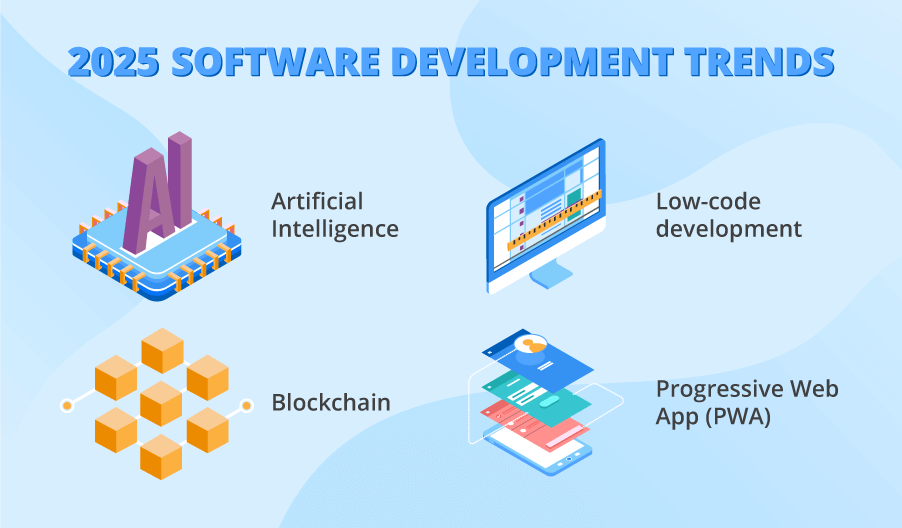
Low-Code Development is Being Adopted by Core Engineers
Although low-code tools have traditionally been linked with citizen developers, many professional developers are now using low-code approaches in specific areas like building or automating admin panels.
Developers can focus on creating new products by using a low-code platform for these tasks, saving time and effort.
Frequently Asked Questions
In the year 2026, how will AI-powered coding tools influence the day-to-day lives of software developers? +
As of now, modern agentic AI tools act more as pairing assistants, handling monotonous tasks such as restructuring multi-file code, auto-generating unit tests, and detecting bugs prior to deployment. Because of this, developers can invest more of their time and effort into system-level architecture, security design, and high-impact strategic initiatives, as opposed to writing routine code modules.
Why is platform engineering poised to be an alternative paradigm to DevOps? +
Because platform engineering addresses the phenomenon that many developers were overburdened while simultaneously providing DevOps-like support and capabilities while also focusing on the end-user's needs.